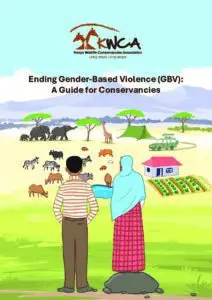
Expanding the community conservancy model across the Tsavo and Mau ecosystems — shifting decision making, leadership and priority setting to communities, and building the institutional capacity of locally led institutions.
Project background
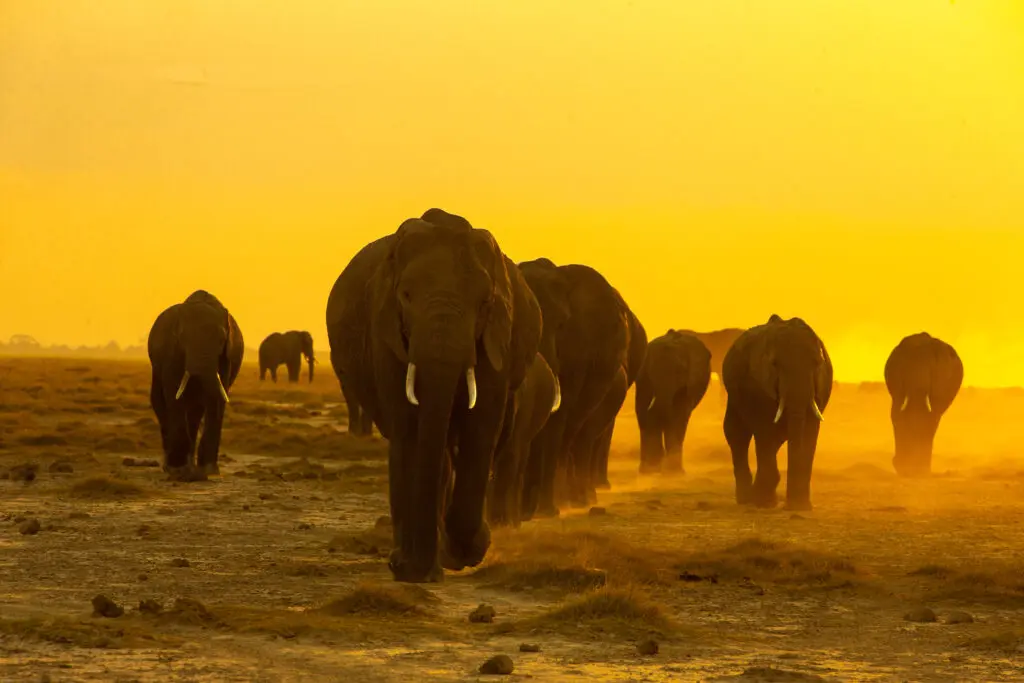
The Tsavo landscape, Kenya’s largest wildlife ecosystem, is a critical stronghold for elephants, lions, rhinos and other iconic species, as well as an essential rangeland for pastoralist communities. Despite its ecological importance, Tsavo faces mounting pressures from habitat degradation, unsustainable land-use practices, charcoal production, invasive species, and competition over water and grazing resources. Prolonged droughts, intensified by climate change, have further strained the landscape, leading to declining pasture quality, drying rivers and weakened wildlife and livestock health. Expanding settlements and infrastructure have also increased human–wildlife conflict, threatening both community safety and wildlife conservation.
At the same time, governance and resource management institutions in the Tsavo landscape — such as wildlife conservancies and ranches, WRUAs and grazing associations — operate with limited capacity, inadequate coordination and insufficient inclusion of women and youth. Economic options for local communities remain narrow, pushing many households to rely heavily on charcoal burning, unsustainable grazing or extractive activities that undermine ecosystem integrity. Tourism potential within conservancies such as Mgeno remains underdeveloped, and climate-resilient agricultural systems are not widely adopted.
Problem statement
The Tsavo ecosystem is experiencing accelerating degradation driven by unsustainable land-use change, overgrazing, water scarcity and climate change. These pressures have led to habitat loss, declining biodiversity, degraded watersheds and increased human–wildlife conflict.
Governance weaknesses — including inadequate capacity of community resource institutions, limited coordination among stakeholders, and exclusion of women, youth and Indigenous Peoples — further constrain effective natural resource management. Communities remain heavily dependent on forest and rangeland resources due to limited livelihood opportunities, contributing to over-extraction, encroachment and competition over water, pasture and land. These interconnected environmental and socio-economic challenges undermine landscape resilience, threaten wildlife habitats and jeopardise the wellbeing of local communities.
Project goal
To expand the community conservancy model, enhancing localised efforts to address development and conservation challenges by shifting decision making, leadership and priority setting to communities and building the institutional capacity of locally led institutions. Specifically, the project empowers KWCA and its landscape associations (TTWCA, BCCA, AET) and conservancies to solve development challenges by addressing policy gaps and building institutional capacity.
Outcome 1: Inclusive governance
Key stakeholders at community and ecosystem levels have built capacities for inclusive governance and coordination to improve biodiversity protection and community livelihoods in an inclusive and participatory way.
- Strengthening the capacity of community structures for transparent, gender-responsive natural resource governance.
- Improved coordination between CBOs, conservancy networks and government actors.
- Human rights capacity building.
- Strengthen and institutionalise gender-responsive policies and guidelines.
Outcome 2: Conservation and ecosystem restoration
Integrated ecosystem management plans for forest, water catchment and rangeland areas in the Mau Forest and Tsavo ecosystems are developed, improved and implemented by the responsible bodies (CFAs, WRUAs, conservancies).
- Ecosystem-level platforms and conservancy policies.
- Enhanced ranger professionalism, welfare and human-rights-based approaches.
- Improved management across 137,840 hectares of protected and conserved areas.
- Active restoration of 700 hectares of forest, 7,000 hectares of rangelands and 20 km of riparian zones.
Outcome 3: Green and inclusive economies
Sustainable food production and marketing systems are implemented within 19 communities living around the Mau Forest and Tsavo rangelands.
- Increased community access to nature-positive livelihood opportunities.
- Strengthened agricultural, livestock and tree crop value chains.
- Growth in tourism opportunities (Mgeno Conservancy, Mau Forest ecotourism products).
- Support to women- and youth-led enterprises and green start-ups through small grants.