Factsheets
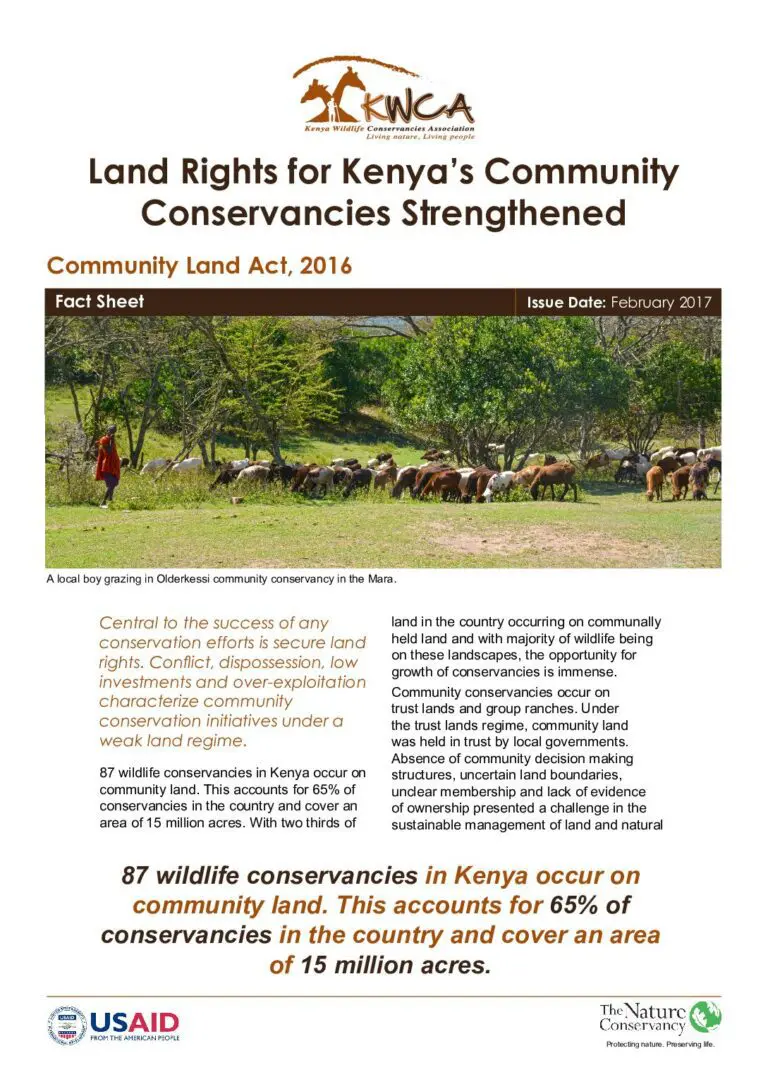
Factsheet: Community Land ACT
Published 2017

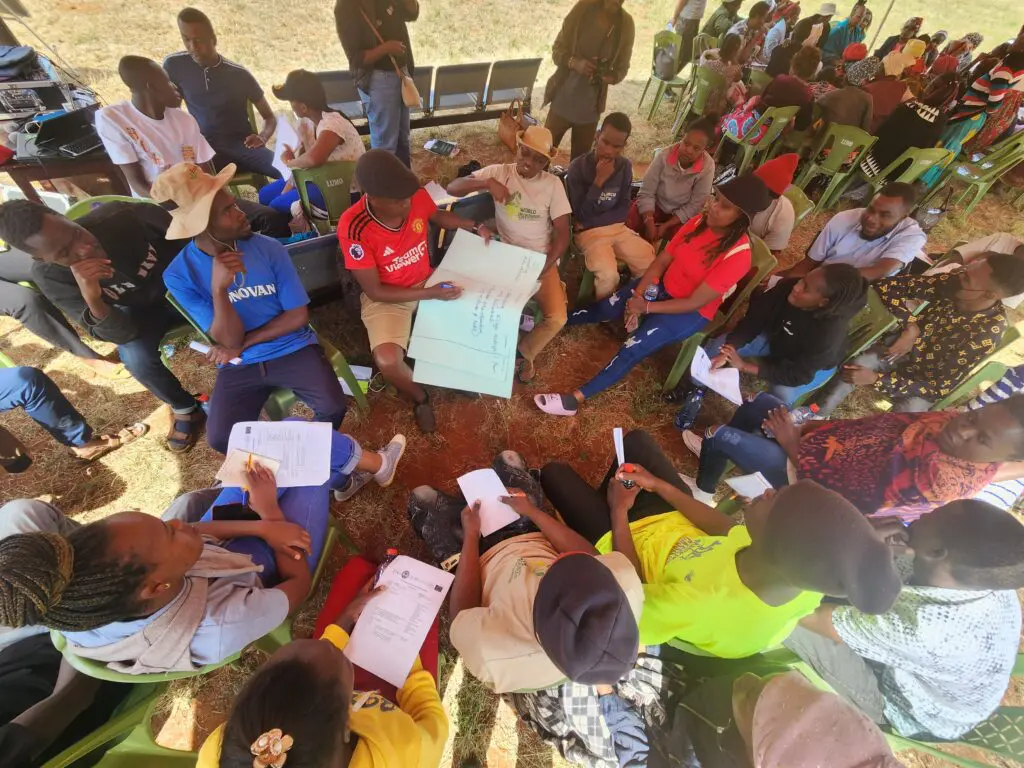
KWCA engages its members to understand how laws and policies affect them and to identify the issues that need policy attention.
KWCA undertakes policy research and analysis, participates in policy review processes and develops policy briefs to inform policy decisions.
KWCA convenes policy dialogues between different stakeholders to identify challenges and opportunities and develop shared recommendations.
After policy enactments, KWCA sensitises communities on policy contents and legal requirements and supports compliance.
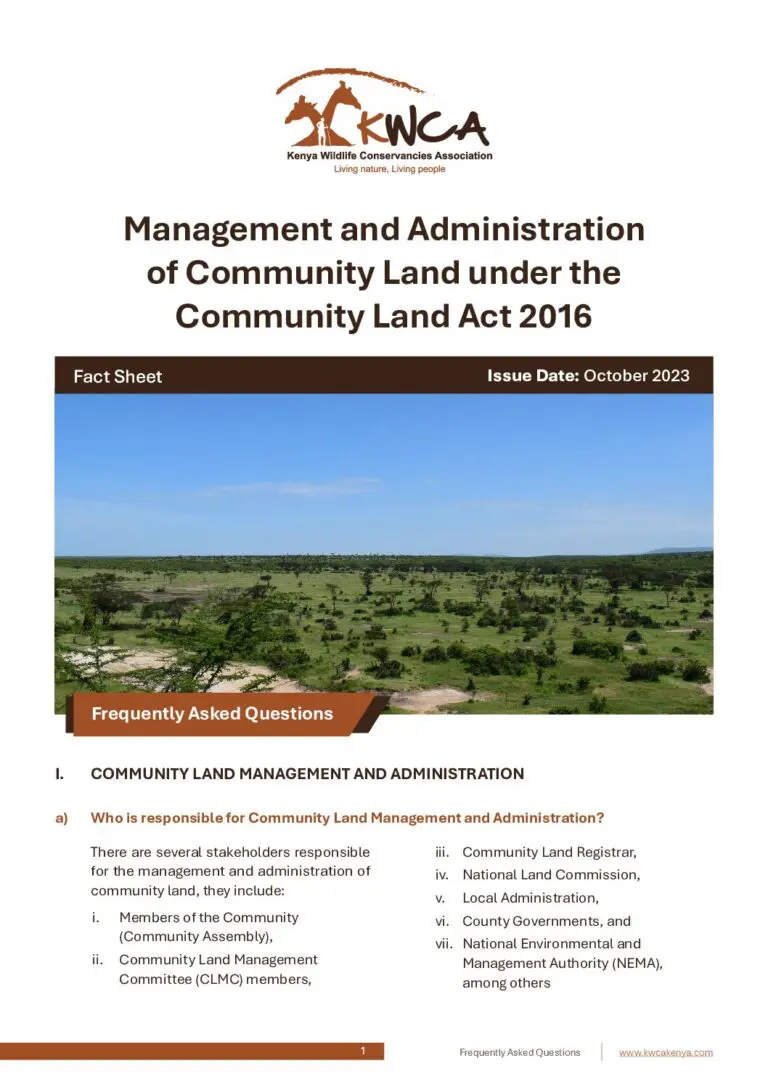
KWCA played a critical role in the passing of the Community Land Act 2016, which confers secure rights over community land — particularly in landscapes where conservancies operate. Implementation has since slowed, and the majority of community land remains unregistered.
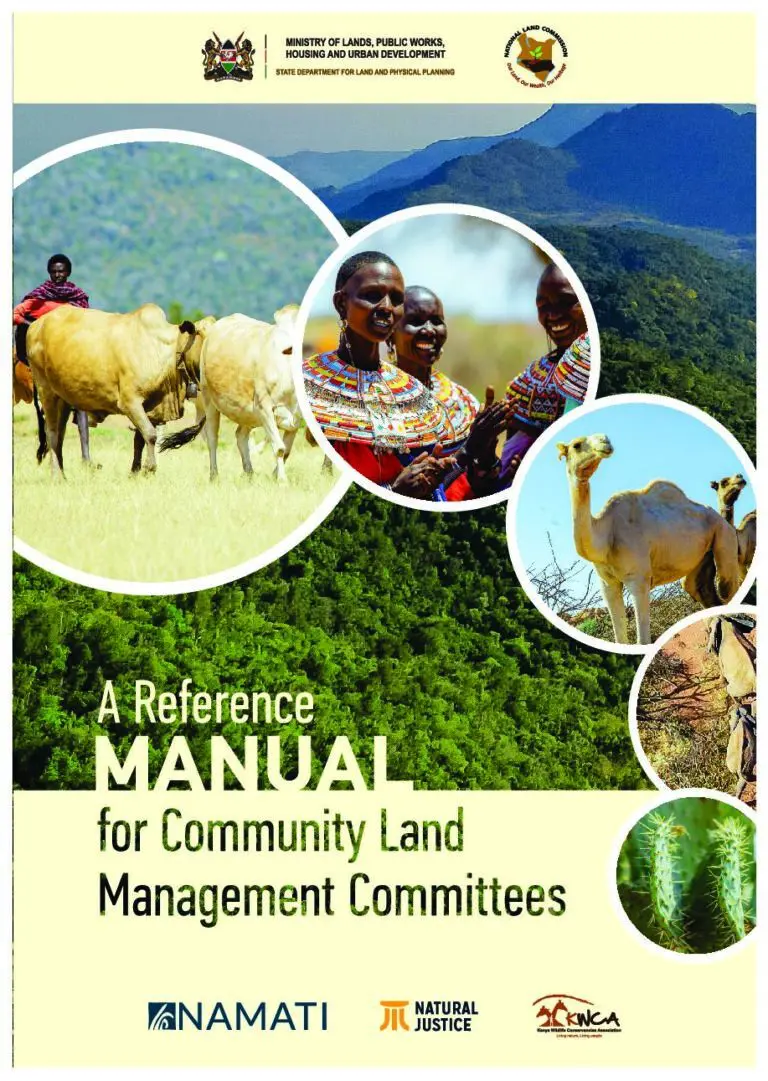
We support implementation of the Act by facilitating communities to secure legal ownership of their land and to develop land use plans for sustainable management. We also advocate for the meaningful participation of women, youth and other marginalised groups in decisions concerning land and natural resources — especially in land use mapping, zoning and registration.
Our advocacy seeks to create an enabling environment in which communities and private landowners are recognised, supported and rewarded for conserving Kenya’s biodiversity for the long term.
Sustaining wildlife conservation on community and private land requires supportive laws, appropriate incentives and reliable access to financial and technical assistance. KWCA advocates for policies and public investments that recognise conservation as a beneficial land use.
We partner with landscape conservancy associations and county governments to mainstream conservation into county planning and budgeting.
We cemented our partnership with the Council of Governors (COG) through a Memorandum of Understanding to strengthen counties’ engagement in wildlife conservation and climate change mitigation through policy advocacy and conservation planning. KWCA is working with COG to develop a Model County Wildlife Conservation and Management Bill — a harmonised, replicable legislative framework to guide county governments in supporting the conservation and management of wildlife in their jurisdictions.
We collaborated with Baringo County Conservancies Association (BCCA), Maasai Mara Wildlife Conservancies Association (MMWCA) and Amboseli Ecosystem Trust (AET) to provide technical assistance for the development of County Conservancies Fund laws with the county governments of Baringo, Narok and Kajiado. The Narok and Baringo county conservancies funds were gazetted in 2025. These laws establish a legal framework allowing county governments to provide financial support to conservancies, ensuring sustainable conservation at the grassroots level.
Conservancies operate within a broad legal and regulatory framework covering wildlife conservation, land, governance, employment, taxation, tourism and environmental management. Compliance strengthens their legitimacy, improves accountability and builds trust with communities, government institutions, partners and investors.
However, most conservancies do not always have sufficient information, systems or technical capacity to understand and meet these requirements. KWCA works with conservancies and relevant government agencies to simplify compliance processes, strengthen institutional capacity and promote responsible conservation practices.
We guide conservancies to understand and comply with national and county laws, regulations and sector standards, and we engage government institutions to clarify legal requirements, improve coordination and make compliance processes more accessible.
Our support goes beyond registration. We help conservancies strengthen their governance and operations to become accountable, transparent institutions — managing legal, operational and reputational risks, respecting human rights, protecting community rights and adopting appropriate social and environmental safeguards.
Conservancies protect wildlife, restore degraded land, store carbon and safeguard other natural resources. They also create jobs, improve peace and security, and enable communities to cope with the impacts of climate change. Yet most communities and private landowners who live with wildlife carry the greatest share of the costs of providing those benefits.
Donor funding and tourism income are not enough. Conservancies need diversified revenue — government support, private investment, environmental markets and other financing approaches — to manage their land effectively and deliver lasting benefits for people and nature.
KWCA works with government, the private sector and conservation partners to advocate for policies and long-term financing mechanisms that recognise the contribution of conservancies to Kenya’s social and economic development. We also ensure that emerging financing mechanisms respond to the needs of conservancies, respect community and landowner rights, deliver fair and transparent benefit sharing, apply strong social and environmental safeguards, and produce measurable, lasting conservation outcomes.
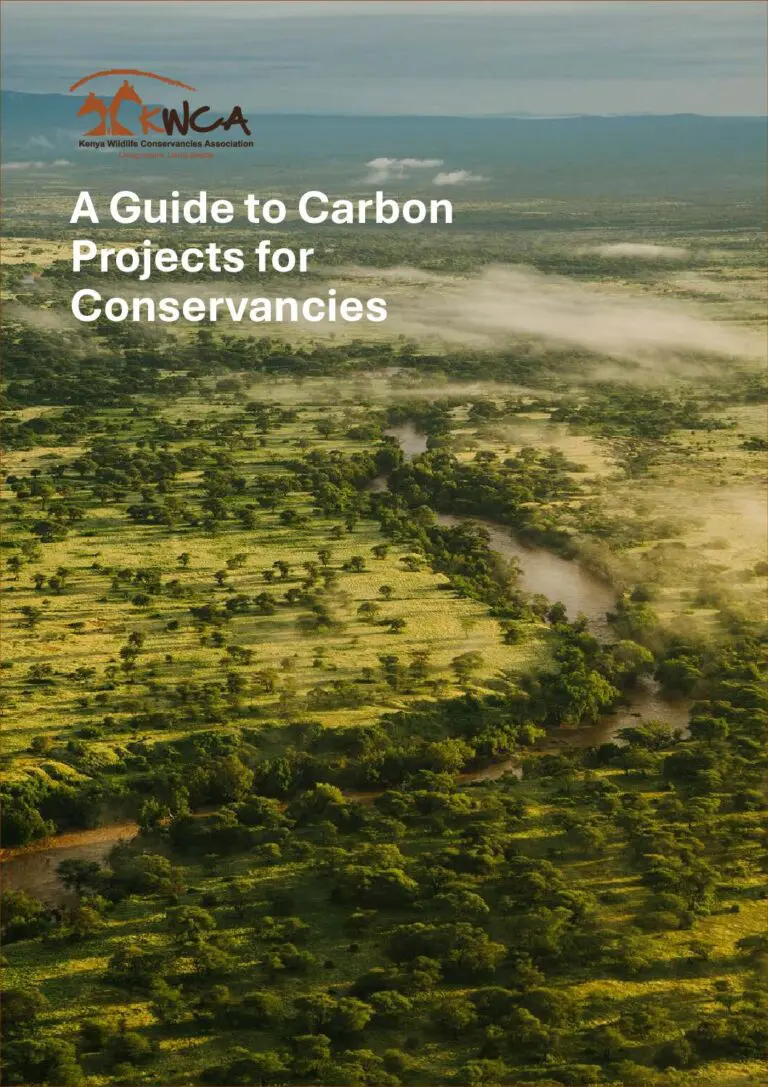
A Guide to Carbon Projects for Conservancies demystifies the fast-evolving carbon sector — its risks, uncertainties and opportunities — and helps conservancies engage with the Voluntary Carbon Market on equitable terms that maximise social, ecological and financial benefits.
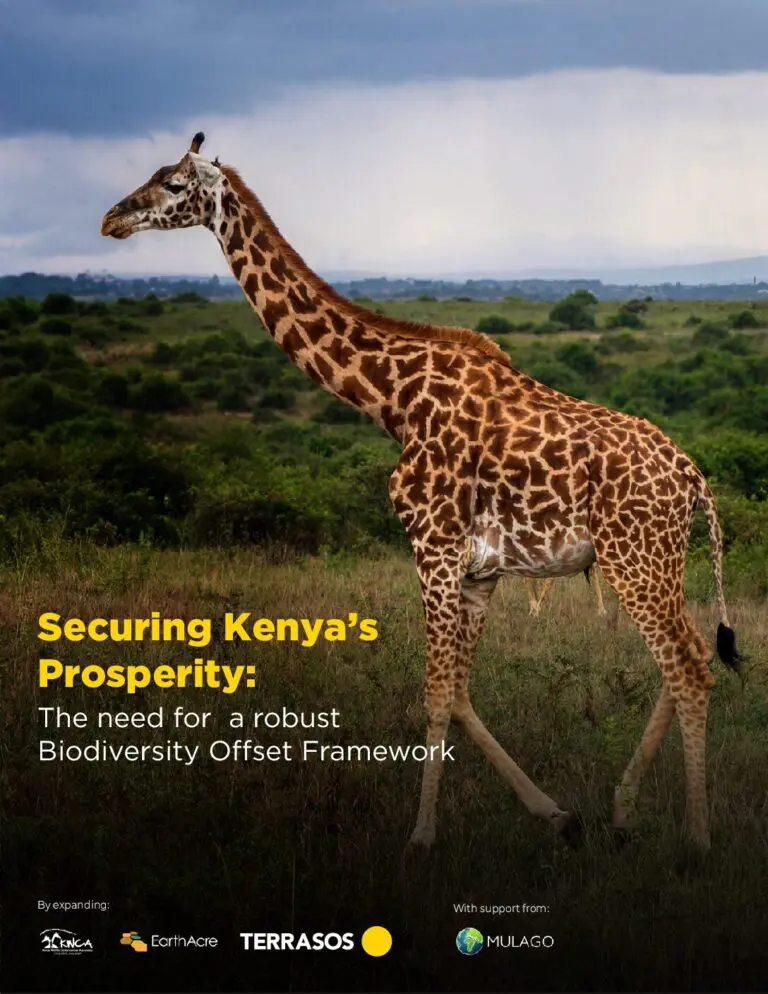
Kenya’s development ambitions and its ecological foundations are on a collision course. Nature-based sectors account for 44% of GDP and 70% of national employment, yet the infrastructure and extractive investments driving Vision 2030 and the BETA agenda are accelerating biodiversity loss faster than public budgets can absorb the costs.
Biodiversity offsets offer a practical, enforceable mechanism to close that gap. They require developers to finance measurable conservation outcomes that compensate for residual biodiversity impacts — applying the polluter-pays principle and high-integrity market principles, and redirecting private capital toward nature. In other jurisdictions, including the UK, Australia and Colombia, offset frameworks have generated measurable conservation outcomes while reducing the fiscal burden on the state.
KWCA, in partnership with Terrasos and Earth Acre, is implementing a joint project to shape biodiversity and compliance markets in Kenya and advance biodiversity offsets.
National laws & policies influenced
Community leaders trained
National & county policy consultations
Policy submissions to government
Land & wildlife governance partnerships
Counties engaged via Council of Governors
Influenced the Wildlife Conservation and Management Act, 2013, which recognised conservation as a land use, recognised community and private conservancies, and enabled the formation of community wildlife associations.
Contributed to and influenced the development and enactment of the Community Land Act, 2016 — and supported five communities to register their land and three to develop land use plans.
Supported and participated in the development of Kenya’s first National Wildlife Strategy 2030 in 2018.
Provided technical input into the 2020 National Wildlife Policy, which promotes conservation on community and private land.
Advocated for KES 1 billion in government support for 3,500 conservancy rangers during the COVID-19 pandemic.
Influenced government allocation of KES 475 million in 2023 to support roads and water projects in more than 20 conservancies.