Enhancing the effectiveness of community conservancies in the Loita–Mosiro sub-landscape to restore habitats, maintain wildlife connectivity and protect endangered species through community-led conservation action.
Project background
Southern Kenya, spanning approximately 80,000 km² (13.7% of Kenya's landmass), hosts over 56% of Kenya's wildlife, including half of its elephant and lion populations. The area forms a vital ecological corridor connecting the Maasai Mara, Amboseli and Tsavo ecosystems, and is central to Kenya's biodiversity and pastoral livelihoods.
However, rapid land subdivision, encroachment and unsustainable land-use practices are fragmenting this landscape, threatening both wildlife and community resilience. KWCA's strategy for Southern Kenya identifies the Loita–Mosiro sub-landscape as a critical conservation gap that requires urgent action to restore habitat connectivity and strengthen local governance.
Problem statement
The Loita–Mosiro sub-landscape is experiencing severe habitat degradation driven by multiple interrelated factors. The shift from communal to private land ownership has fragmented traditional grazing areas, while unregulated fencing and the sale of land for agriculture and speculation have further disrupted wildlife movement and rangeland continuity. Water scarcity and encroachment have intensified human–wildlife conflict, putting additional pressure on already fragile ecosystems. At the same time, deforestation and charcoal production in key forest areas continue to degrade critical habitats.
These challenges are compounded by weak governance structures and limited institutional capacity among nascent conservancies. Without immediate, community-led interventions, the ecological integrity of this corridor will continue to deteriorate, threatening biodiversity conservation and the livelihoods of pastoral communities that depend on the landscape's natural resources.
Project goal
To enhance the effectiveness of community conservancies in the Loita–Mosiro sub-landscape to restore habitats, maintain wildlife connectivity and protect endangered species through community-led conservation actions.
Governance and institutional strengthening
Improve the governance and management effectiveness of nascent conservancies to ensure inclusivity, transparency and sustainability.
- Support two conservancies (Oletukat and Elangata Enterit) to review and formalise legal constituting documents.
- Train conservancy boards and community leaders — including women and youth — in good governance, financial management and participatory decision-making.
- Support the onboarding of conservancy staff (managers and liaison officers) to operationalise management systems.
- Facilitate learning exchanges with established conservancies to share best practices.
Conservation and biodiversity management
Strengthen ecological monitoring and protection of endangered species within priority biodiversity hotspots.
- Undertake biodiversity hotspot analysis and spatial mapping with WRTI and KWS.
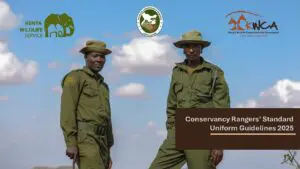
- Train and equip community rangers and forest guardians with GPS-enabled monitoring tools, uniforms and motorcycles.
- Implement community-led patrolling and ecological data collection using the EarthRanger platform.
- Initiate restoration of 200 hectares of degraded riparian and savanna areas within conservancies.
Sustainable livelihoods
Promote the financial sustainability of conservancies and improve community livelihoods through nature-based enterprises.
- Support the development of investment opportunity briefs (eco-tourism, carbon, sustainable grazing).
- Facilitate private sector engagement for partnership and investment in conservation enterprises.
- Build the capacity of community groups to implement sustainable grazing and resource management models.