
Exploring Biodiversity Offsets to Bridge the Biodiversity Finance Gap in Kenya
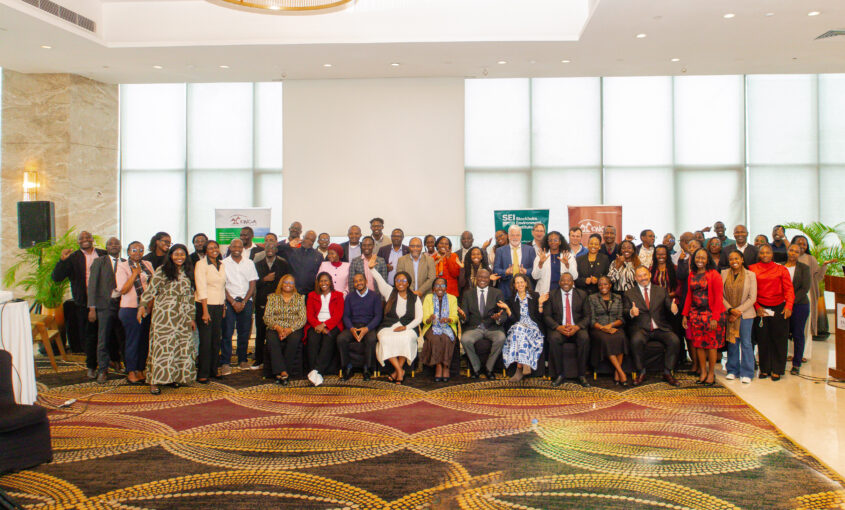
23 July 2026, Nairobi — The Kenya Wildlife Conservancies Association (KWCA), together with Terrasos, EarthAcre and the Stockholm Environment Institute (SEI), convened a policy dialogue to explore the role of biodiversity offsets in Kenya.
Held under the theme, “Making the Business Case for Biodiversity Offsets in Kenya: Bridging the Development and Biodiversity Finance Gap,” the forum brought together government officials, technical experts, conservation organisations, finance specialists and other stakeholders. Participants discussed how biodiversity offsets could help Kenya address its biodiversity financing gap while pursuing its development goals.
The dialogue was informed by the growing pressure that investments in infrastructure, energy, mining and other extractive sectors are placing on habitats and other important ecosystems.
Kenya’s economy and people depend heavily on healthy ecosystems. Nature-based sectors contribute approximately 44 per cent of the country’s Gross Domestic Product and support about 70 per cent of national employment. The country, therefore, cannot afford to lose its biodiversity as it pursues development.
Kenya faces an estimated biodiversity financing gap of approximately KES 645 billion over the next decade. As infrastructure and other development projects expand, a critical question remains:
How can Kenya grow without losing the ecosystems that sustain its economy and people, and who should meet the cost of protecting and restoring these ecosystems?
If biodiversity loss is not adequately addressed, its costs will ultimately be borne by the government, local communities and future generations.
Dr John Chumo, Conservation Secretary at the State Department for Wildlife, affirmed the importance of sustainable financing in achieving Kenya’s biodiversity goals.
“For Kenya to achieve its national biodiversity goals, it will require sustainable financing. Biodiversity offsets are one of the instruments that can contribute to addressing the biodiversity finance gap,” he said.
However, a key challenge to this will be establishing the policy framework and financing mechanisms that enable developers to fund measurable conservation outcomes to compensate for significant and unavoidable impacts on biodiversity.
A well-regulated biodiversity offset system could help Kenya internalise environmental costs that are currently borne by the government, conservation organisations and communities. It could also reduce the government’s financial burden, direct private investment towards conservation and ecological restoration, and make Kenya more attractive to investors and financial institutions that require projects to meet strong environmental and social standards.
KWCA Chief Executive Officer Dickson Ole Kaelo noted that conservancies have demonstrated their value in protecting wildlife, maintaining important habitats and supporting local livelihoods. However, many remain chronically underfunded.
“Philanthropic funding and tourism revenues are no longer sufficient to sustain conservation, particularly outside national parks, where community and private conservancies protect critical wildlife habitats and corridors,” said Kaelo. “A well-designed biodiversity offset system could enable the private sector to contribute towards bridging the biodiversity finance gap while helping conservancies address persistent funding shortages.”
Lessons from Latin America
Terrasos shared experiences and lessons from Latin America, particularly Colombia, where biodiversity offset frameworks and habitat banks have been used to channel private finance towards measurable, long-term conservation outcomes.
Terrasos pioneered Colombia’s Habitat Bank System, which treats ecosystems as long-term natural infrastructure. Through the system, verified biodiversity units are created and purchased by businesses and investors to finance permanent conservation and restoration activities in threatened ecosystems.
Juanita López-Peláez, Project Lead at Terrasos, highlighted the opportunity for Kenya to adapt the habitat bank model to mobilise and manage biodiversity finance at scale.
“Habitat banks can provide the legal, financial and ecological guarantees needed to direct investment towards conservation areas where measurable biodiversity gains can be generated, monitored and maintained over the long term,” she explained.
Participants observed that Kenya could adapt this model by establishing strong regulations and standards, transparent systems, measurable conservation outcomes and effective coordination among responsible institutions. Any framework would also need robust environmental and social safeguards to ensure that biodiversity offsets benefit both people and nature.
Moving from Policy Commitments to Implementation
Participants examined possible entry points within Kenya’s existing environmental laws, policies and institutional arrangements for developing biodiversity offset guidelines and establishing a national biodiversity offset registry.
Relevant frameworks include the Environmental Management and Co-ordination Act, the Wildlife Conservation and Management Act, the National Biodiversity Strategy and Action Plan, and Kenya’s updated Nationally Determined Contribution.
Dr Anderson Kehbila, Research Director at the Stockholm Environment Institute, cautioned that biodiversity offsets should not be treated as a substitute for sound environmental planning or as permission to degrade nature.
“Biodiversity offsets should only address significant and unavoidable residual impacts after every reasonable effort has been made to prevent and minimise environmental damage and restore affected ecosystems,” he said.
This approach follows the mitigation hierarchy, which requires developers to first avoid biodiversity loss, minimise impacts that cannot be avoided and restore affected areas. Offsetting should only be considered as a last resort for the residual impacts that remain after these measures have been exhausted.
The dialogue underscored the need for Kenya to develop a credible and well-regulated biodiversity offset framework founded on scientific evidence, transparency, accountability and meaningful community participation. Such a system could help the country balance development needs with its responsibility to conserve biodiversity and secure healthy ecosystems for present and future generations.