A National Conversation to Advance Equitable Governance in Kenya
As countries race toward achieving Target 3 of the Kunming-Montreal Global Biodiversity Framework (KMGBF) to conserve 30% of the planet by 2030, attention is shifting from how much land is conserved to how conservation is governed. Increasingly, conservation actors recognise that achieving 30×30 will depend on strengthening inclusive, rights-based governance that places Indigenous Peoples and Local Communities (IPLCs) at the centre.
These communities steward significant portions of the world’s biodiversity. Their leadership, knowledge, and governance systems are therefore essential not only for equitable conservation, but for long-term sustainability.
Strengthening Equitable Governance through Peer Learning
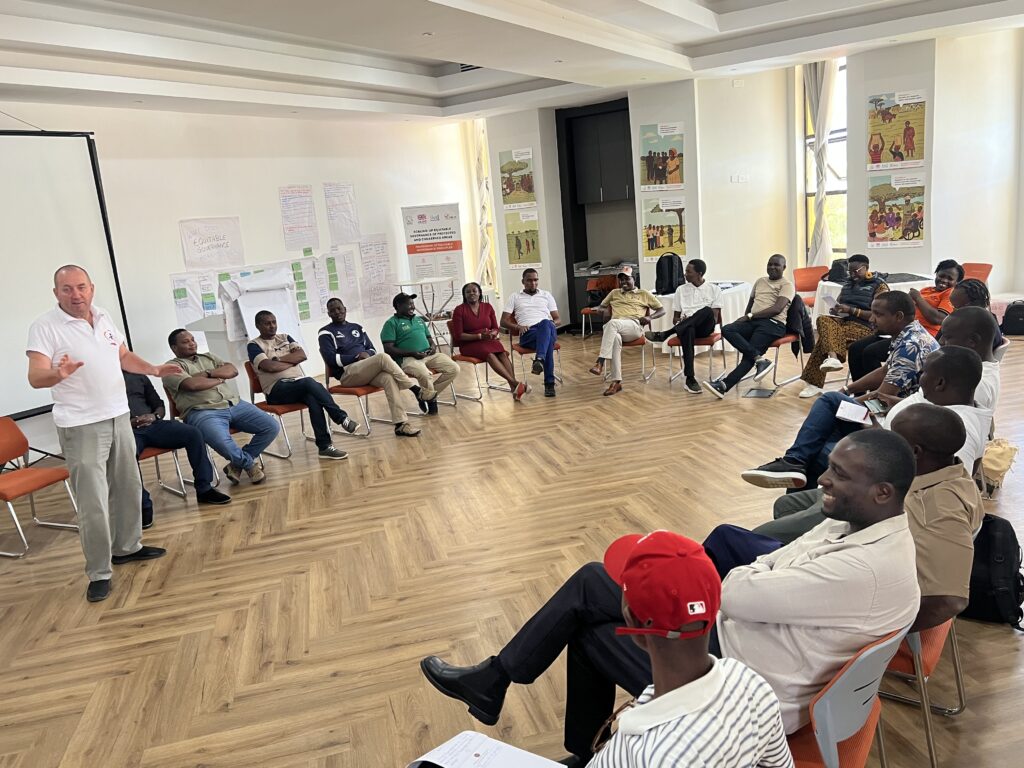
Building on its ongoing work to promote equitable governance among its members and partners, the Kenya Wildlife Conservancies Association (KWCA) convened a two-day workshop on 17–18 February 2026 in Machakos. The workshop brought together community conservancies, landscape associations, conservation partners, and KWCA representatives to learn, collaborate, and explore the establishment of a Community of Practice to advance equitable governance at the national level, whilst also continuing to promote it at local levels.
The workshop created a space for meaningful dialogue among 30 participants, enabling them to identify common challenges, share experiences, and reflect on lessons and successes in advancing equitable governance within community-led conservation.
This engagement built on the Scaling-up Equitable Governance (SEGA) project, implemented by KWCA in partnership with the International Institute for Environment and Development (IIED) and conservation NGOs in Tanzania, Madagascar, Nepal, and Bolivia working with communities. The project promotes equitable governance within protected and conserved areas through the use of the Site-level Assessment for Governance and Equity (SAGE) tool. Through SAGE, communities assess governance challenges and develop locally driven actions to strengthen inclusion, accountability, and fairness in decision-making.
During the workshop, participants demonstrated a strong understanding of equitable governance and its core principles. These included genuine inclusion in leadership and decision-making, ensuring women, men, youth, persons with disabilities, and other stakeholders are equitably represented, transparency and accountability in governance structures, and equitable outcomes in benefit sharing and resource access..
Joyce Mbataru, KWCA’s Communications Manager, shared the global evolution of equitable governance and the shift in conservation approaches from fortress conservation to community-based natural resource management, and more recently, community-led conservation. She explained that equitable governance stems from the belief that conservation can only succeed when it is fair and just, and when decision-making systems respect the rights of Indigenous People and Local Communities while ensuring equitable benefit sharing.
SAGE as a tool for advancing equitable governance
Joyce Peshu, KWCA Programme Officer for Gender and Governance, presented on use of the SAGE tool, including a short video showcasing the step by step process of how a SAGE assessment is carried out within a conservancy. Joyce, who has been leading the SAGE assessments, noted that KWCA had implemented 10 SAGE assessments in 10 conservancies across different landscapes. With this in mind, she stated that “we are not only sensitising and assessing the status of governance but ensuring we guide the conservancies accordingly to come up with their own solutions to the governance challenges identified in the form of actions plans.”
Early successes from SAGE implementation were shared by representatives from Mara Ripoi, Mwaluganje, and Kiborgoch conservancies. These included increased participation of women and youth in annual general meetings, greater representation of women in leadership positions, and recruitment of female staff within conservancy management structures. These changes were enabled by reviews of conservancy constitutions, which identified major governance gaps especially on women and youth exclusion.
Kafaa Mwarimo, a representantive from Mwaluganje Conservancy reflected on the process:
“SAGE enabled us to create safe spaces for women and youth to engage with and interact with the conservancy structures in ways that had not happened before. This drove awareness, thinking and planning from the marginalised voices, leading to demands for constitutional reviews, transparency and accountability from the leaders. That is how real empowerment happens.”
Mercy Mbogho, A SAGE facilitator in the Marine conservation space, shared challenges and lessons from applying SAGE within Marine Protected Areas and a Locally Marine Managed Areas (LMMAs). She noted that governance dynamics in marine contexts are often more complex due to the number of stakeholders involved.
“You need to work with all multiple government agencies, community user groups and conservation stakeholders each with different objectives. It takes time and resources,” she explained. “However, building strong relationships and trust across stakeholders helps ensure a smoother governance process.”
Complementary Governance Tools and Approaches
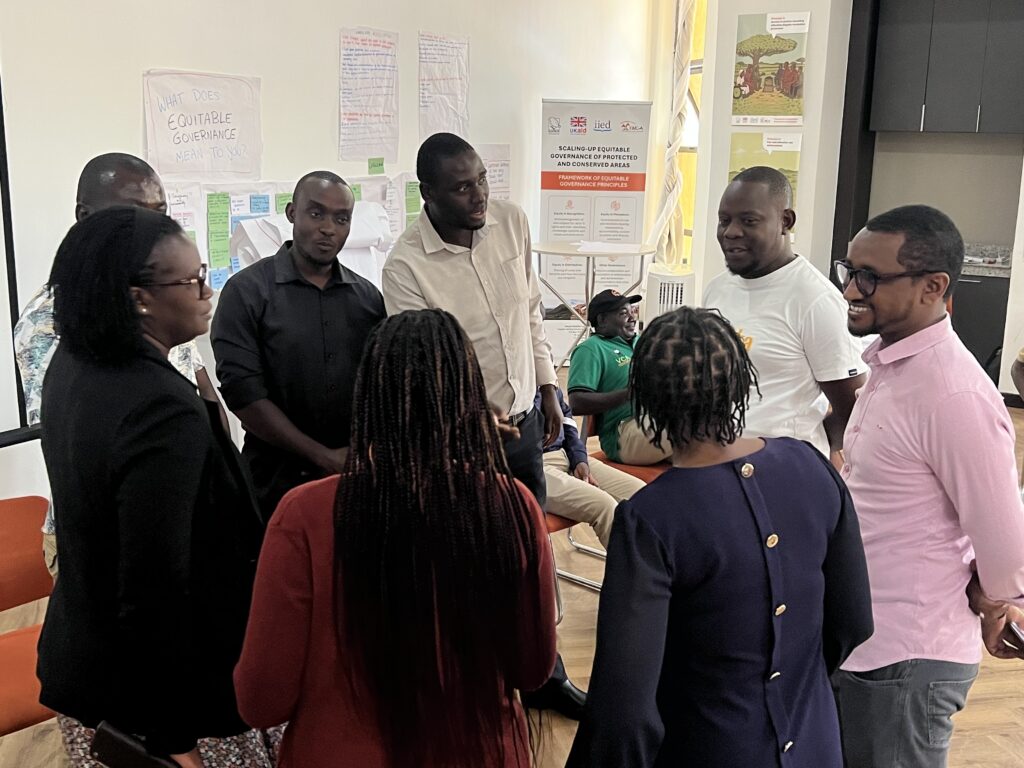
Participants also shared other governance tools and frameworks being applied across Kenya. The Taita Taveta Wildlife Conservancies Association (TTWCA) highlighted their work in establishing women and youth forums and facilitating community dialogues to address harmful gender norms. They also support conservancies to review constitutions and policies to enhance gender inclusivity.
Elijah Waichanguru from Northern Rangelands Trust reflected on their governance framework, noting that communities are not homogeneous and cannot be addressed through a single governance tool. Their framework aims to address governance bias and support conservancies in self-assessing governance performance.
Ann Komen, Project Manager at Flora & Fauna International, shared their use of the Social Assessment for Protected Areas for privately owned lands. FFI also applies Social Analysis and Action (SAA) and Knowledge, Attitudes, and Perceptions (KAP) surveys to address negative gender norms and promote equitable governance.
Abdub Galma from the International Union for the Conservation of Nature (IUCN) further shared their governance approach, which integrates by-laws and local grazing committees to promote equitable decision-making and resource management.
Expanding understanding of governance challenges
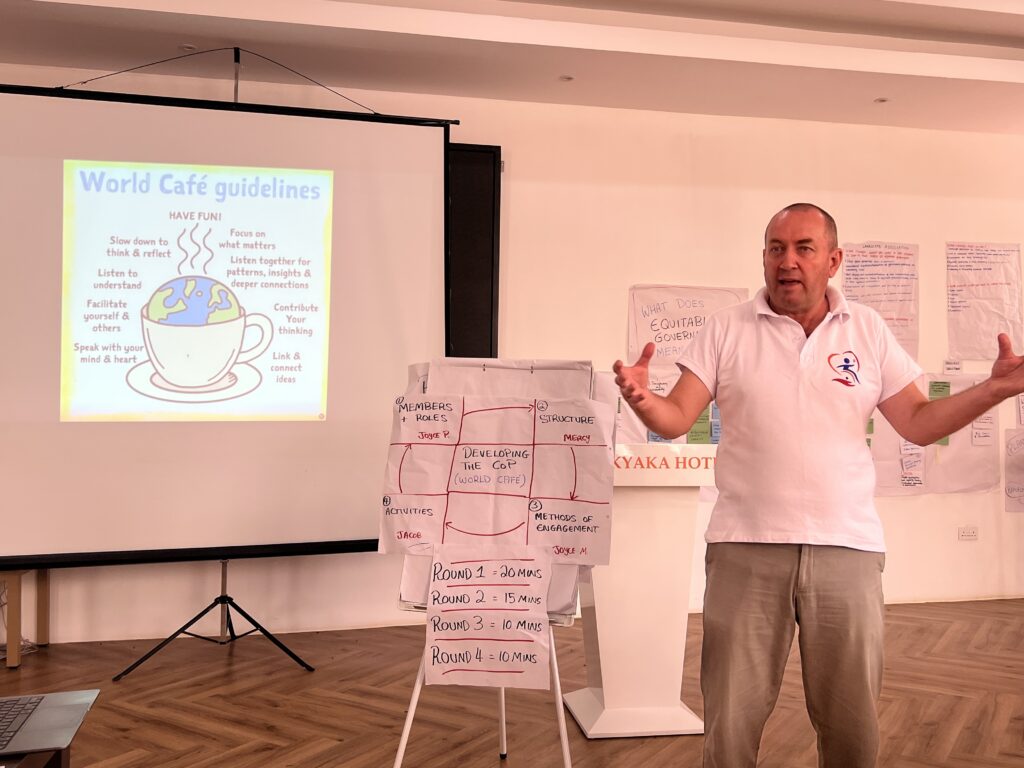
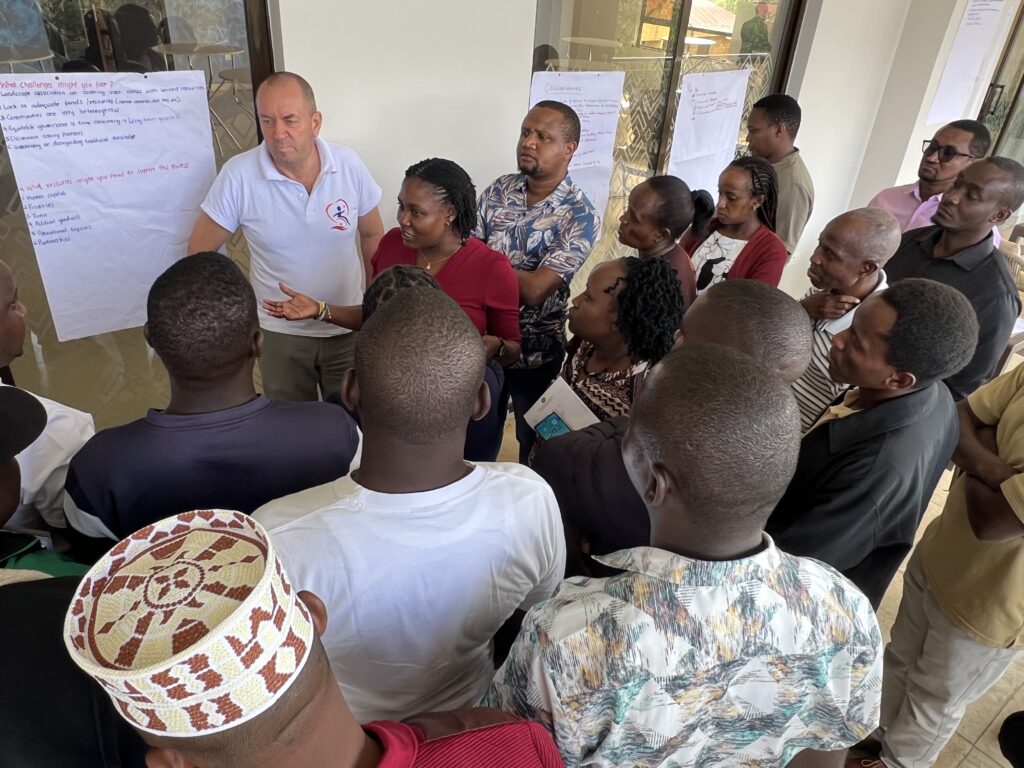
Using Open Space Technology, participants self-organised around governance issues they considered most pressing. Eight thematic issues were identified and discussed across two rounds of group sessions.
The majority of the participants felt that governance projects often faced challenges because as Parashina Lampat from South Rift Association of Landowners (SORALO) observed “communities are diverse and shaped by complex power dynamics. These include elite capture, political influence, ethic divisions and relationship with investors, all of which can hinder progress on equitable governance.”
Implementation of the Community Land Act (2016) was identified as a key opportunity for strengthening governance. However, participants noted that progress has been slowed by limited political goodwill and high costs associated with community consultations and public participation.
Other challenges identified included sustainability of governance initiatives beyond project timelines, navigating multiple governance tools, and ensuring meaningful inclusion where power imbalances persist.
Establishing a Community of Practice
To address these challenges, participants agreed to establish a Community of Practice on Equitable Governance. The Community of Practice will provide a structured platform for peer-to-peer learning among conservancies, landscape associations, conservation NGOs, universities, and donors involved in conservancy governance.
Through this platform, members will share experiences, reflect on governance challenges, co-create solutions, and document case studies and innovations in a supportive environment. The Community of Practice will also support collaboration across organisations, promote learning on governance tools, and strengthen collective advocacy for equitable governance within Kenya’s conservancies.
As demand for transparency and accountability within conservancies continues to grow, and as donors and partners increasingly prioritise community-led conservation, strengthening equitable governance is becoming central to achieving both biodiversity and community wellbeing outcomes.
The newly established Community of Practice marked an important shift from individual governance assessments toward collective learning and collaboration. It is our belief that this Community of Practice will play a vital role in supporting deeper understanding and implementation of Equitable Governance at all levels.